

The electrification of ferry transport across Scandinavia represents one of the most tangible transitions in zero-emission mobility. Norway alone operates close to a hundred electric ferries, and the introduction of hydrofoil technology—exemplified by vessels such as the Candela P-12—is extending the operational envelope of electric ferries from short, fixed routes to longer coastal passages at commercial speeds. This transition creates new operational requirements. Electric hydrofoil ferries operate at high speeds with tight turnaround schedules, often on routes that cross busy shipping lanes, approach constrained harbour environments, and interact with diverse maritime traffic. Situational awareness—both for the ferry operator and for the broader maritime coordination system—becomes more important as routes extend and speeds increase.
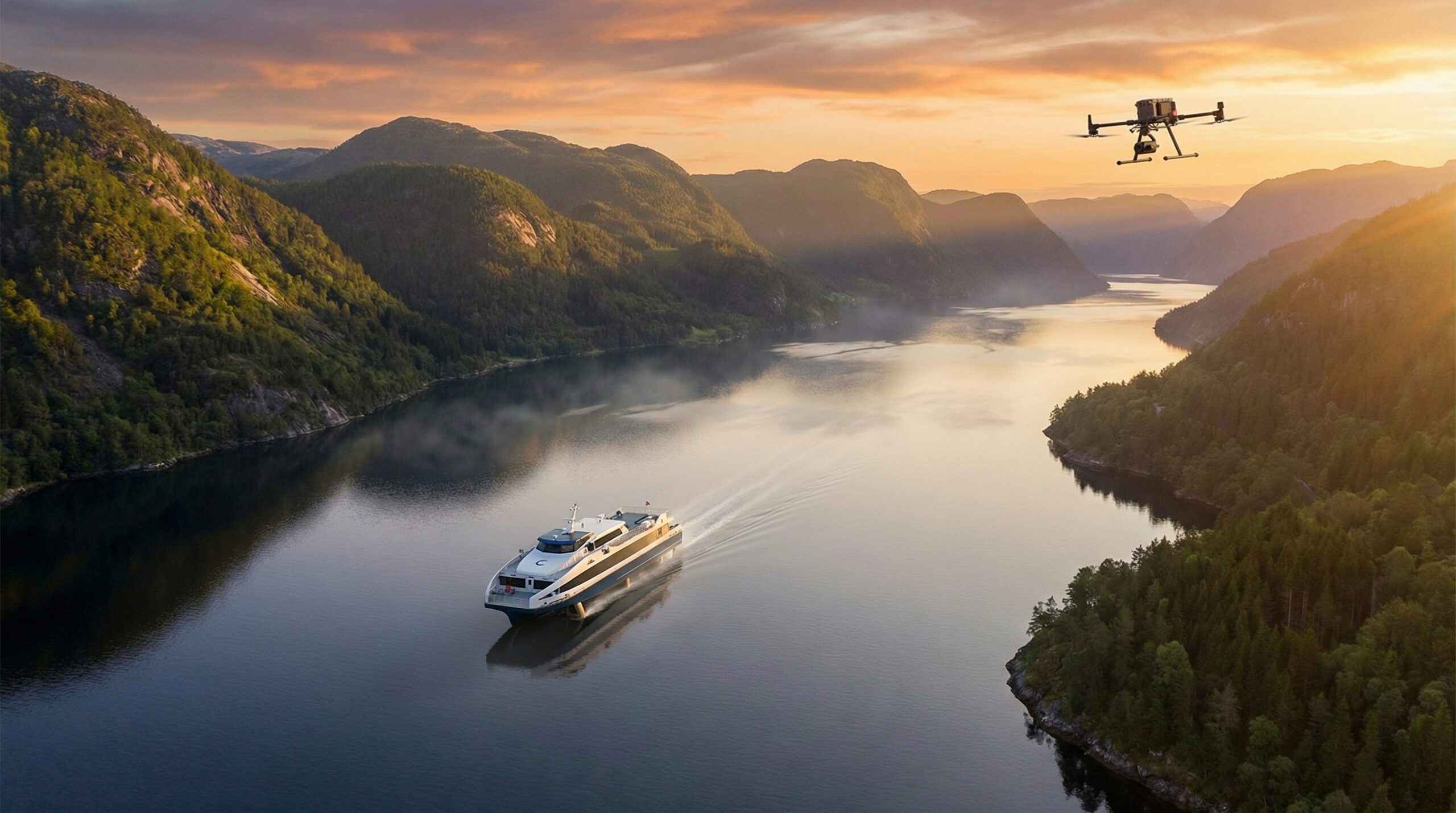
The role of drones in ferry route operations
Drone-enabled services can support electric ferry operations at several points. Route survey and hazard assessment before new services are established, providing high-resolution imagery of approach lanes, docking areas, and obstacle environments. Ongoing monitoring of charging infrastructure, docking facilities, and shore-side equipment. And real-time situational awareness during operations, particularly in congested or weather-sensitive environments.
For ferry operators establishing new routes—especially in fjord environments where infrastructure is sparse and environmental conditions variable—drone survey provides a cost-effective means of generating the operational data needed for route planning, risk assessment, and regulatory submission.
Harbour and terminal monitoring
Harbour environments present specific monitoring challenges. Docking operations for high-speed vessels require clear approach lanes, accurate assessment of wind and current conditions, and awareness of other vessel movements. Drone-based monitoring of harbour terminals can provide operators and port authorities with overhead views, vessel tracking, and infrastructure condition assessment—supplementing existing harbour surveillance systems.
For electric ferries that depend on shore-side charging infrastructure, the condition and availability of charging equipment is operationally critical. Drone-based inspection of charging installations, cable runs, and electrical infrastructure supports preventive maintenance and reduces the risk of unplanned downtime.
Piloting and navigation support
The concept of a “ferry pilot”—an experienced navigator guiding a vessel through challenging waters—has deep roots in maritime tradition. As electric ferries extend to new routes in fjord and coastal environments, the combination of experienced pilotage with drone-provided situational awareness represents a natural evolution. Drones can provide the pilot with real-time overhead perspective, particularly valuable in narrow passages, during adverse visibility conditions, or when navigating unfamiliar approach channels.
This application sits at the intersection of maritime operations and drone services, requiring integration between the ferry’s bridge systems and the drone’s data outputs—a practical example of the integration-first approach that characterises operational drone service delivery.