

Ports, offshore supply bases, and energy terminals handle high volumes of cargo, vessels, and personnel in complex operational environments. Safety, security, environmental compliance, and operational efficiency all depend on accurate situational awareness. Drone-enabled monitoring services address these requirements by providing aerial perspective, thermal and visual inspection, and integration with port management systems.
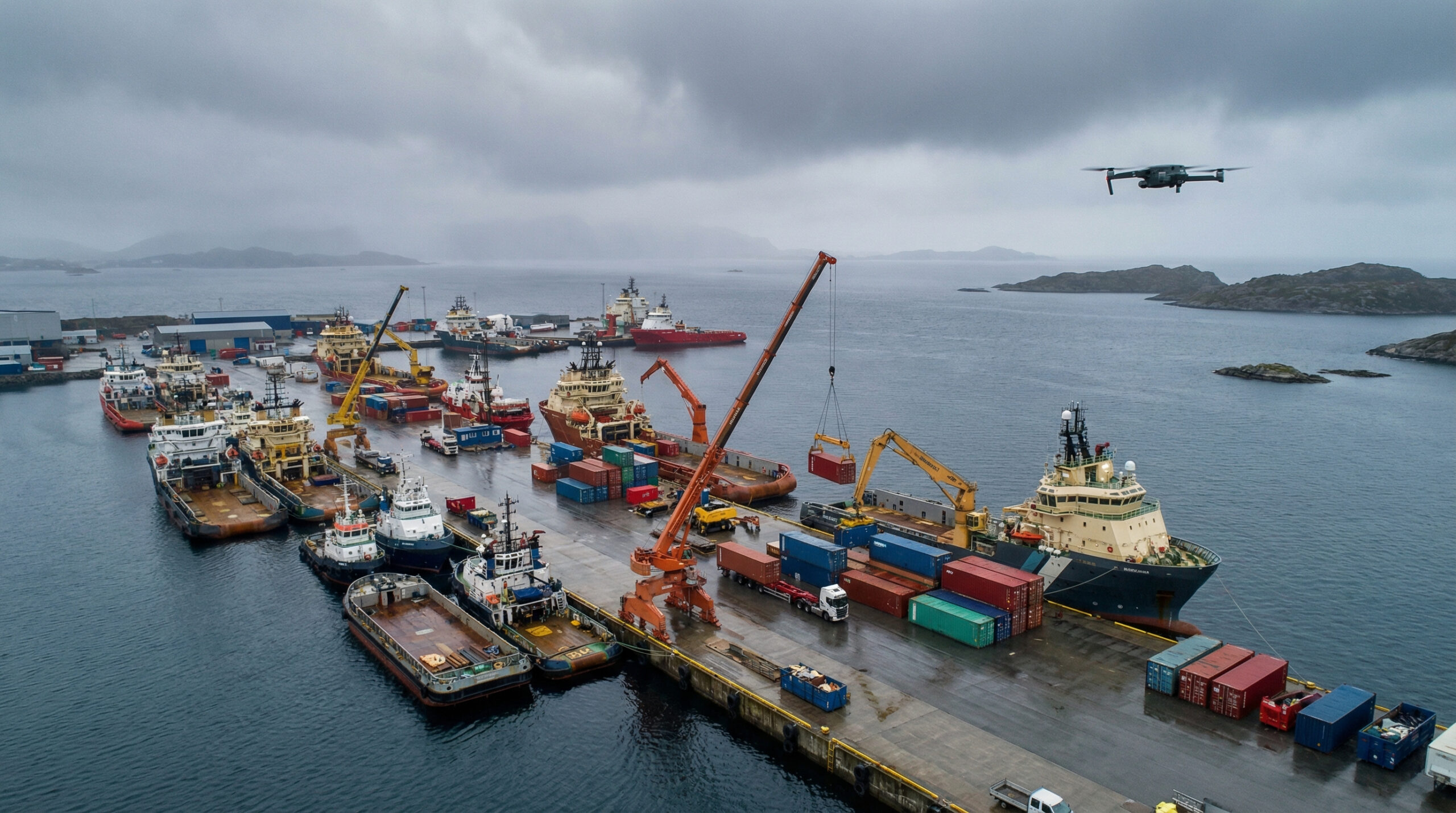
Port perimeter and security monitoring
Port facilities are designated security zones under the International Ship and Port Facility Security (ISPS) Code. Perimeter monitoring, access control verification, and surveillance of restricted areas are ongoing requirements. Drones—particularly dock-based systems capable of rapid response—can supplement fixed camera systems by providing mobile, elevated surveillance that covers blind spots and responds to alarms.
Event-triggered drone missions in port security contexts require careful governance: clear trigger definitions, human confirmation protocols, evidence capture procedures, and coordination with port security officers. The governance framework must align with the ISPS requirements and the port’s own security plan.
Cargo and logistics monitoring
Aerial monitoring of cargo operations—container movements, crane activity, vessel loading and discharge—provides operational visibility that supports scheduling, efficiency analysis, and safety oversight. For offshore supply bases handling hazardous materials, drill pipe, and heavy equipment, drone monitoring can verify compliance with handling procedures and storage requirements.
Environmental monitoring and compliance
Port operations are subject to environmental regulations covering air quality, water quality, noise, and emissions. Drone-mounted sensors can monitor emission plumes, detect oil sheens on water surfaces, and document environmental conditions around port facilities. This data supports compliance reporting and provides early warning of environmental incidents.
Energy terminal inspection
Energy infrastructure—including LNG terminals, pipeline landfalls, and electrical substations—requires regular inspection for corrosion, mechanical damage, and operational integrity. Drone-based inspection reduces the need for scaffolding, rope access, or shutdown of live equipment, enabling more frequent inspection cycles with lower risk to personnel.