

Telecommunications networks depend on physical infrastructure—towers, masts, antenna arrays, cable routes, and equipment shelters—that requires regular inspection and maintenance. Drone-based inspection offers a faster, safer alternative to climbing and rigging for many of these inspection tasks, particularly for tower-mounted equipment at height.
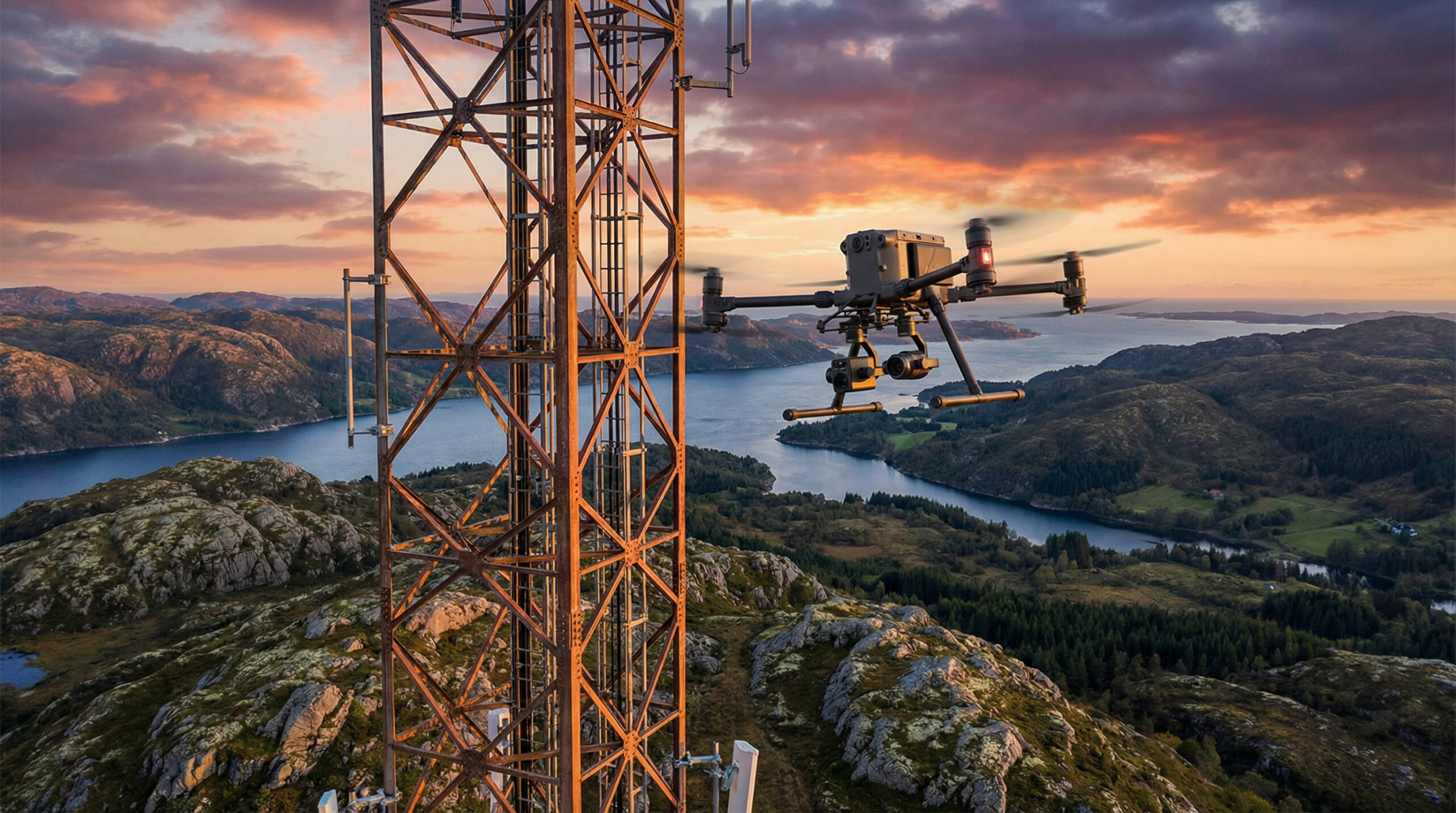
Tower and mast inspection
Climbing telecommunications towers is a high-risk activity that requires specialised training, safety equipment, and often the involvement of multiple personnel. Drone inspection can capture detailed imagery of tower structures, antenna configurations, cable connections, and equipment condition without climbing, reducing risk and often reducing inspection time.
The imagery captured by drone inspection supports condition assessment, identifies equipment discrepancies, and documents the as-installed configuration of antenna and equipment—information that is valuable for network planning, lease management, and regulatory compliance.
Network infrastructure monitoring
Beyond individual towers, telecommunications networks include extensive cable routes (overhead and underground), equipment shelters, power supply installations, and site access infrastructure. Drone survey of these distributed assets supports asset management, vegetation encroachment monitoring (for overhead lines), and security monitoring of unmanned sites.
5G and network densification
As telecommunications networks densify—particularly with the deployment of 5G small cells—the number of network sites increases substantially. Managing the inspection and maintenance of a larger number of smaller sites creates demand for efficient, scalable inspection methods. Drone-based inspection, supported by automated route planning and AI-based image analysis, can help network operators maintain quality across a growing asset base.