

Pipelines and other linear assets require inspection across long corridors where access can be difficult and where change may occur gradually. Drone-based corridor inspection supports repeatable observation of terrain movement, erosion, vegetation encroachment, third-party activity, and other conditions relevant to integrity management and maintenance planning.
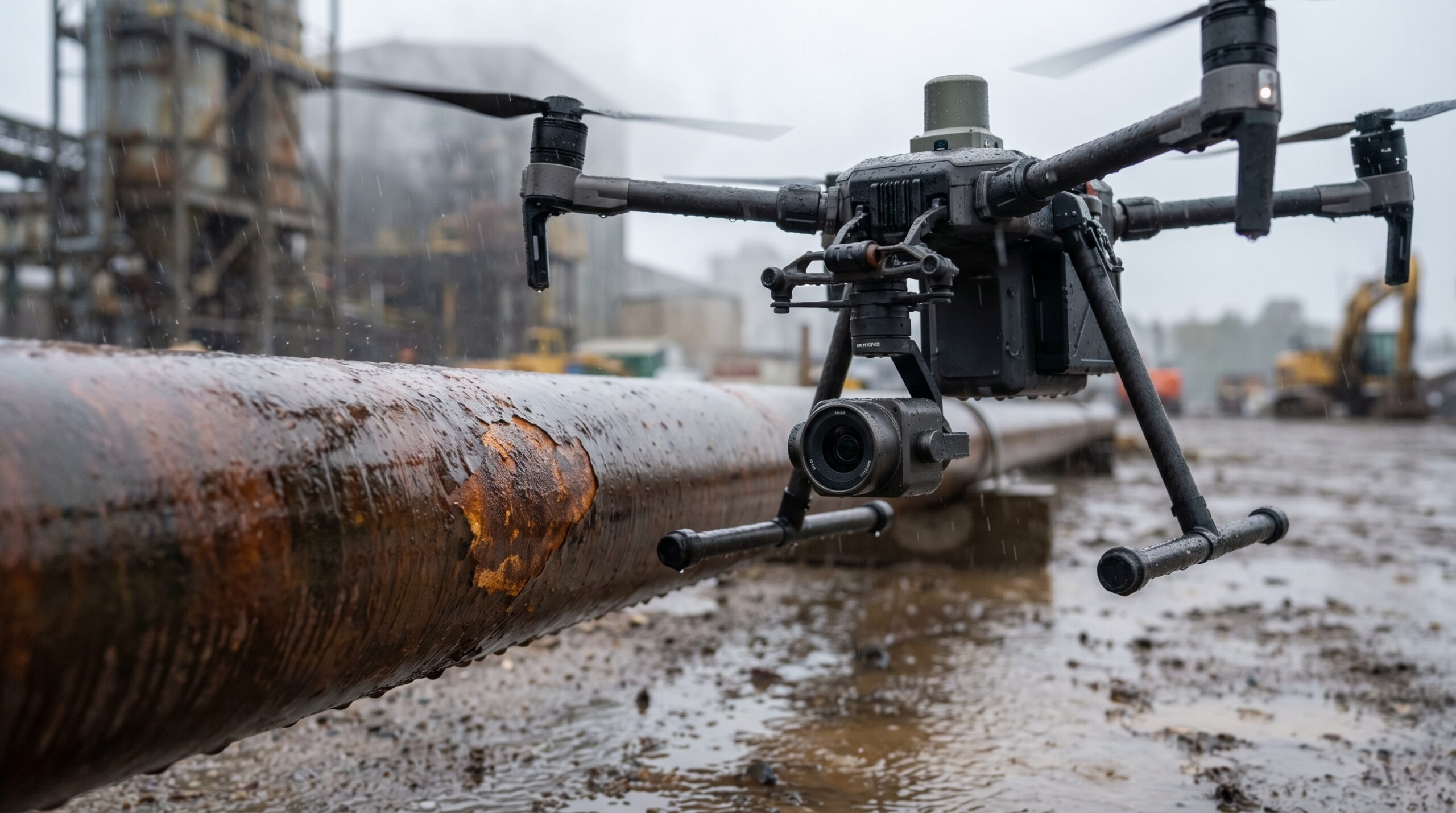
Pipelines and similar linear assets present a distinct monitoring problem. Unlike point infrastructure, they extend across long distances, cross different terrain types, and are affected by a wide range of local conditions. Inspection therefore depends on methods that can cover corridor length efficiently while retaining enough detail to identify emerging issues.
Why corridor inspection is different
Linear infrastructure passes through areas where erosion, vegetation growth, unstable slopes, access disruption, and third-party activity may all affect operational risk. Conditions may change gradually and unevenly along the route. Monitoring must therefore support both broad corridor awareness and closer inspection of specific points of concern.
What drone surveys can identify
Drone-based corridor inspection can support observation of terrain changes, vegetation encroachment, surface disturbance, drainage-related issues, exposed sections, and signs of unauthorised activity near the route. In environments where ground inspection is slow or difficult, aerial monitoring can improve the speed and consistency of corridor review.
Supporting integrity management and maintenance
The value of drone inspection increases when surveys are repeated using comparable routes and documented reporting logic. This makes it easier to compare conditions over time, identify where further inspection is warranted, and support integrity management with structured evidence. For pipeline operators and related infrastructure owners, this contributes to more targeted maintenance planning and better situational awareness.